Saturday, November 8, 2014

INTERSTELLAR Fails to Take Off


Ever since Stanley Kubrick made 2001: A Space Odyssey, considered by many critics to be the greatest film ever made, the space film has been the ultimate test for the accomplished auteur. Any good space romp is expected to be a tour-de-force of technical prowess, with existential themes that address the meaning of life. Space is the deep darkness against which human life exists on earth, and there is no larger canvas for a filmmaker to work on in terms of creating all-human-life encompassing manifestos.

So things can run into some problems when the filmmaker in question is Christopher Nolan, whose successful run of Batman films led him to create what he saw as his visionary dreamscape masterpiece Inception. That film set the tone for his newest offering, Interstellar, a meaning-of-life-all-space-films-Nolan-ever-saw-packed-into-one mess that manages to make a sliver of sense only because the majority of the film involves characters explaining it to us.

Matthew McConaughey plays Cooper, an ex-NASA pilot who never got the chance to make it into space and is now a farmer in the soon-to-be future, where humanity's ravenous need for iPods has given way to a lack of food across an entire planted marred with dust storms. Technology is a thing of the past, and the dwindling population on Earth doesn’t have much of a future with food supplies becoming scarcer. Cooper’s young daughter Murphy begins to experience supernatural events in her bedroom, events that are interpreted as a mysterious code. Soon Cooper inexplicable finds himself as the much-needed pilot for a space mission to another galaxy through a wormhole, and off the film goes.

Giving specifics regarding what happens throughout Interstellar is unnecessary other than to say they are generally uninspired. Boring planets are explored by boring characters accompanied by boring robots that make boring 2001: A Space Odyssey jokes. The film lapses into self-parody as everyone refers to “gravity” and “relativity” and how everything is “relative” and they need to get back to their “relatives” who they are being pulled to by the “gravity” of love. Anne Hathaway makes a turn as Dr. Brand, another astronaut who waxes philosophical on the possibility of love being a tangible physical force like gravity. But what could otherwise have been a compelling monologue is undercut by a sloppy story that relies on the pseudo-scientific premise of blackhole intergalactic travel, and which only gets more ridiculous from there.

The characters of Interstellar are constantly explaining such pseudo-scientific goings-on, so much so that the majority of the script is devoted to such exposition. So when points connecting love and gravity are made they seem like the forced grand statements they are, and like we’re being told the reason why all the intergalactic mumbo-jumbo is taking place at all. That’s too bad, because the space scenes are executed with documentary-like realism, much more so than in Alfonso Cuarón’s cinema-of-attractions thrill ride Gravity. Nolan makes us feel like we are floating in space and then feels he has to explain it to us why it is so rather than just let us enjoy it.

And enjoyable those moments are. Interstellar is nothing less than a beautifully shot film fatally hampered by a script that tries to make sense of things where there is no sense to be made. Perhaps if the worlds Nolan showed us were amazing enough themselves, making sense of it wouldn’t matter. But like Inception before it, Interstellar gives us a whole realm of possibility and then fills it up by coloring politely within the lines.

Sunday, November 2, 2014

BIRDMAN OR (THE UNEXPECTED VIRTUE OF IGNORANCE) is a Dark Comedy Tour-De-Force

Birdman or (The Unexpected Virtue of Ignorance), the new film by director Alejandro Gonázlez Iñárritu, crackles with unhinged energy, with manic performances and witty dialogue to spare. The film is edited into a single continuous shot, like a play, veering through backstage rooms and rooftop of St. James Theater and the streets of Times Square like a surreal dream, from one absurd situation to another. We feel like we are in conversation with people on the edge of their sanity, and in the case of Riggan Thomson (Michael Keaton), past that edge. A washed-up up Hollywood blockbuster actor who believes he has super powers, Riggan seeks artistic validation by writing, directing, and starring in an adaptation of Raymond Carver’s “What We Talk About When We Talk About Love” on Broadway.

The comic-book superhero avatar of Riggan’s past success, “Birdman,” talks to Riggan as a voice in his head, a manifestation of his past success and ego that is both sinister and comical at the same time. Other side effects of Riggan’s unhinged nature include Riggan believing he is throwing around his dressing room furniture with his mind to relieve his copious stress. But Riggan’s insanity is relative compared to those around him, and Birdman is truly an ensemble film, with a stellar lineup that includes Emma Stone, Edward Norton, Naomi Watts, and Zack Galifianakis. The entire cast brings performances that convey a similar sense of desperation and mania.

Birdman is a cyclical meditation on art vs. commerce, Broadway vs. Hollywood, and the ultimately arbitrary and subjective nature of opinion, no matter how seemingly weighty. Riggan’s “Birdman” persona is what he clings to because it’s how he defines and protects himself; it’s his most powerful representation of his ego. Norton’s Broadway bad boy Mike Shiner is Riggan’s New York foil caught in the same dilemma; A man so embroiled in the expression of “truth” in his art that his everyday self is an artifice. It’s this symmetrical expression of opposing sides that lends Birdman such a satisfying sense of completion as a statement regarding “Showbiz.” Sam Thomson (Emma Stone), Riggan’s post-rehab daughter extols the virtues of celebrity at the expense of dignity, and how it can hold a power when one remains egoless. This is contrast to the dead-eyed New York Times theater critic Tabitha (Lindsey Duncan), who chides Riggan for being a mere celebrity trying in vain to be a true artist.

If ignorance is bliss, then Birdman is about a group of confused people trying to find that bliss, to give up the burden of thinking they know the truth about themselves, or anything else for that matter. Riggan’s ex-wife Sylvia (Amy Ryan) says he’s mistaken love for admiration. Riggan seeks to gain back that admiration, thinking he’s finally finding love that he actually never really lost, revealing something absolute in the face of fickle fame and fortune.

It’s the energy of the performances that guides us through the characters’ darkness, especially from Keaton, Norton and Stone, as tortured souls who smirk at their own pain. Theirs are some of the most powerful of year, driving a film that infuses comedy into a story about a desperately neurotic industry. Soul searching doesn’t get more entertaining than this.

Friday, October 24, 2014

NSA Whistleblower Ed Snowden Documentary CITIZENFOUR is the Most Exciting Film of the Year

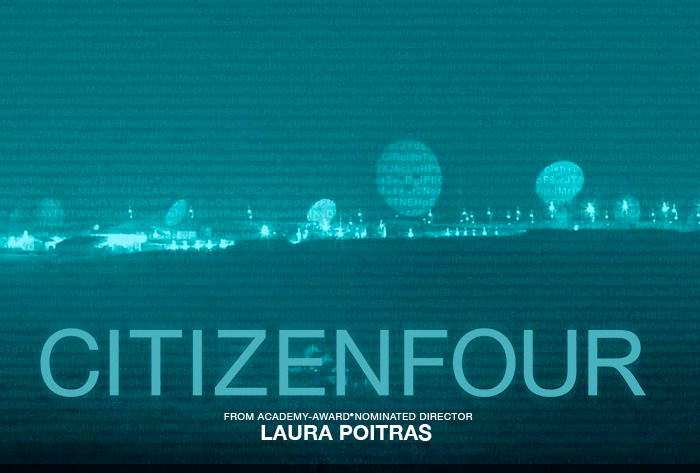
CITIZENFOUR is the new documentary by Laura Poitras, the first journalist whom National Security Agency whistleblower Edward Snowden contacted about unveiling documentation that the US government was collecting massive amounts of information on people throughout the entire world through their use of the internet, cell phones and telephone calls. Like a real life version of The Matrix, the film begins with a series of typed computer screen conversations between the then-unknown source, identifying themselves only as “Citizenfour,” and Poitras, who is instructed to verify the security of her computer systems before further contact can be made. We are also introduced to William Binney, the NSA cryptographer who quit after over 30 years of service to reveal that shortly after 9/11 the US government decided to begin spying on all American and world citizens, a decision that bore forth the programs Snowden revealed in 2013. Snowden passed information on to journalists revealing NSA court orders for an indiscriminant amount of information from major communications providers including Verizon, as well as the passive internet data mining systems PRISM and TEMPORA, the latter created by British intelligence organization GCHQ.

Scored with a minimalist soundtrack provided by Nine Inch Nails, CITIZENFOUR pulsates along with a simmering tension. An early scene shows with what would be otherwise innocuous footage of a construction site turn insidious when revealed to be that of an NSA surveillance facility in Utah. Judges in San Francisco get up in arms when a Department of Justice attorney suggests they shouldn’t intervene after it was revealed in 2006 the NSA was spying on AT&T customers and some of those customers decided to sue. It is against this political backdrop that Snowden enters the picture, agreeing to meet Poitras in a hotel in Hong Kong.

Anticipation couldn’t be higher for Snowden to emerge, the stakes meticulously built to great heights through Poitras’s voice-over narration and the steady unveiling of the circumstances of what is declared in CITIZENFOUR, “The greatest violation of civil liberties in the history of America.” Poitras is instructed to employ the help of journalist Glenn Greenwald, who joins her along with journalist Ewen MacAskill from UK newspaper The Guardian, in Hong Kong over the week in which Snowden unveiled the now infamous NSA documents. What unfolds over the course of that week is fascinating, scary, and often hilarious, sometimes all at once. Jason Bourne himself couldn’t think up all the spy hijinks Snowden pulls to protect himself, the journalists and the information he is passing on to them, and they are frequently extremely entertaining.

What CITIZENFOUR shows that hasn’t been known before is the thought process behind Snowden’s decision to expose himself as the source so soon after the NSA documents are reveled, but Snowden is resolute about taking a stand and putting a face to his act of defiance against what he considers unconstitutional government oppression. Throughout CITIZENFOUR loss of privacy is equated with loss of civil liberty, and though Snowden presses the idea that the real story is about the American government and not himself, his stepping out from behind the curtain was an act of personifying a particular notion of idealism, an act that CITIZENFOUR brings even more fully to fruition. It doesn’t hurt that Snowden is charismatic, photogenic and youthful, and that the last shot we see of him in Hong Kong before going off into the political wilderness to seek status as a refugee is of him decked out all in black, Neo-style, slicking back his hair with all the vanity of a typical millennial.

The rest of CITIZENFOUR is devoted to furthering the context of the past year regarding the NSA scandal, including the cell phone tapping of German Chancellor Angela Merkel. Meanwhile Glenn Greenwald, Ewen MacAskill and Laura Poitras all continue their investigative journalism regarding “national security reporting.” Snowden travels from Hong Kong to Moscow, Russia where his passport is cancelled while in the transit zone of the airport, and it is in Russia he is granted asylum. The final scenes of the film take place in Moscow, providing closure on the story of Snowden, but not on the larger narrative that he revealed to the world. That story is just beginning, and with CITIZENFOUR we have a thrilling introduction to a saga larger than life and stranger than fiction; In short, the most exciting film of the year.

Tuesday, October 21, 2014

Scott Walker + Sunn O))) Make Operatic Horror Album SOUSED


Scott Walker has always been an enigmatic figure. His rise as an ‘60s American baritone crooner, influencing everyone from David Bowie to Radiohead in the process, took an unexpected turn as he became a recluse in England, sporadically making increasingly noisy, difficult albums that at any given moment showcased both his golden voice and, say, percussion created by punching meat. Truly avant-garde, Walker now teams up with drone-metal band Sunn O))), who provide an unsettling minimalist backing to Walker’s beautiful melodies for Soused, an album that in another dimension could have been the soundtrack to the Texas Chainsaw Massacre.

Soused begins deceptively on “Brando”, with gorgeous arpeggiating guitars and Walker quoting the American traditional Shenandoah, singing, “Across the wide Missouri.” Things get ugly as Sunn O))) begin their industrial grinding and Walker starts singing, “Sneaking by, I am down on my knees,” imagery that evokes American slavery. From here on Soused comes off like a minimalist opera, ripe for theatrical interpretation. If Igor Stravinsky and Trent Reznor had teamed up to compose a Neo-Classical Opera, this is probably pretty close to what they would have created. Soused is cyclical, with musical and lyrical motifs repeated every few minutes, and every track spills over the 9-minute mark.

“Bull” takes things further down the horror-film rabbit hole, with percussion provided by metal clanking. It seems all too appropriate when Walker starts singing in Latin, as if he’s exorcising his demons while power chords drone on behind him. “Herod 2014” features shrieking clarinets as Walker laments, “She’s hidden her babies away,” undoubtedly from some unnamed menace. “Bladepoints knife the air,” Walker sings on “Fetish,” upping the fright as a jazzy trumpet plays like a David Lynch film, and a warping, detuned bassline stretches out like vertigo.

On closing track “Lullaby” Walker wonders, “Why don’t minstrels go from house to house, howling songs the way they used to?” Probably because too many bad things happened to them, but Walker keenly takes up the role himself on Soused, traversing the darkness and howling at the evils it holds.

Monday, October 20, 2014

Thurston Moore’s THE BEST DAY Brings Noise and Beauty, Sometimes Both at Once


Thurston Moore, of the now disbanded noise rock group Sonic Youth, brings beautiful chimey guitar work, droning distorted soundscapes, and even straight up rock ‘n roll to his new album The Best Day. After separating from his wife and fellow Sonic Youth bandmate Kim Gordon, Moore continues the legendary band’s sound with an album that recalls the group’s early ‘00s masterpiece Murray Street on several tracks, while offering a few surprises as well. Moore is joined by Sonic Youth drummer Steve Shelley, as well as James Sedwards on guitar and Deb Googe of My Bloody Valentine on bass.

A cascade of guitar harmonics glisten like wind chimes album opener “Speak to the Wild,” a track of clean guitars that ebb and flow like the best material on Murray Street. “The king has come to join the band,” Moore sings amid imagery of the wilderness that envelopes civilization, with Moore grouping musicians in with wild animals rather than with the of empires of men. “Don’t let the dark get you lost,” he reminds us, describing a place where you can be free but have to navigate for yourself. The following track, “Forevermore,” is a sprawling plane of simmering dissonance, as guttural guitars pulsate while Moore expounds on the subject love in Dadaist poetic terms.

Next comes “Tape,” the first track on The Best Day to feature lyrics by poet Radiuex Radio, which Moore edited for the song. With abstract lyrics concerning mixtape culture, they are befitting for a man so steeped in the DIY world of music. Other tracks with lyrics by Radio include “Detonation,” which could read like a punk rock political manifesto covering the last 100 years, and “Vocabularies,” a meditation on gender roles. This is an especially charged topic for a man who just separated from the feminist icon and former Sonic Youth bassist Kim Gordon, and when Moore sings, “Boys, they had their say, that was all yesterday,” he is evoking a more progressive tomorrow, perhaps for himself as much as everyone else.

The title track, “The Best Day,” is an unexpected treat from Thurston Moore, a rollicking rock ‘n roll number that wouldn’t have been out of place on an early ‘70s Rolling Stones record. An affirming shot in the arm on an album that is largely contemplative, Moore brings the swagger in his impassioned vocal performance, singing lines like “Here’s a man who walks alone/He takes and bow then he takes you home,” a celebration of rock ‘n roll strut. After the deft rock-your-face-off guitar solo the song goes widescreen on the chill-out coda, a much-merited rest after one of the best garage rock songs of the year.

The final two tracks, “Grace Lake” and “Germs Burn,” revisit the Murray Street territory with which Moore opens the album, with a familiar but welcoming sonic palette. The Best Day may largely evoke Moore’s days with Sonic Youth, but it also definitely shows an artist who still knows how to pull off surprises all on his own.

Sunday, October 19, 2014

Lana Del Rey at Hollywood Forever Cemetery, Saturday, October 18, 2014


Lana Del Rey played the Hollywood Forever Cemetery Saturday night, a setting so perfect for her lounge lizard starlet crooner persona that one couldn’t be faulted for believing her music was conceived amongst the graves of Hollywood’s famous deceased. The stage itself was an ode to yesteryear California glamour, completed with palm trees and gothic candlesticks. Backed by a stripped down rock trio and donning a green dress with a rosary around her neck, Lana sought the sweet spot between Marilyn Monroe and Jesus Christ, most explicitly stated in her third song of the evening, “Body Electric.” After opening with “Cruel World” and “Cola,” laying down the requisite tortured American girl lyrics, Lana delved into the song that best showcases the connection between the sexual salvation she offers up in her songs, sacrificing herself to abusive men while seeking the pleasures of the flesh, and the flesh sacrifice of Jesus. The song rang out with deepened meaning amongst the tombstones of men and women who undoubtedly sought spiritual redemption in both religion and earthly pleasures, dabbling in the excess for which Hollywood is legendary.

Lana Del Rey commands a cultish devotion amongst her fans, in full force Saturday night. Girls with flowers in their hair shrieked at Lana’s every gesture as she coyly waved to the crowd, flashing smiles in between the concentrated singing of tales of tortured excess. Yet for a singer notoriously obsessed with death in a setting that could be described as morbidly appropriate, the concert was never mournful, and Lana seemed to be in a downright cheerful mood. The evening served as a celebration of Hollywood glamour, an ode to the very past from which Lana Del Rey draws her inspiration.

The set delved into some of the most popular tracks off of Born to Die and Ultraviolence, including rocked-up versions of “Blue Jeans” and “Born To Die,” as well as a haunting version of “West Coast” that featured Lana soaring into operatic falsetto, turning the song into aria for palm trees and movie stars. Descending from the stage to engage in unholy communion with her audience, Lana posed for selfies with fans and received gifts, including a book that looked like it could be used for wedding photos, and a flower bouquet. “Ultraviolence” featured the most straightforward ode to Hollywood Forever, as footage of the cemetery played behind Lana as she sang about an abused starlet, as if the song was emanating from the mausoleums themselves.

During a pause in the set the audience began cheering for “Shades of Cool,” one of the strongest tracks from Ultraviolence and one that best personifies the album’s thesis of Hollywood cool and glamour. Not having prepared the song for the set, the band played it devoid of visuals or lights, as Lana would be loathe to deprive her fans of the lines “He lives in California, too/He drives a Chevy Malibu.” Often criticized for being an aloof and stilted performer, such a concession to the audience showed Lana as anything but, instead aware and willing to take a risk to make a musical connection. The risk was worth it, and for the first time her fans got to hear one of the most beautiful and moving tracks in her catalogue performed live.

The rest of the set featured more subdued numbers, including torch song “Million Dollar Man” and the track for which Lana is best known, “Video Games.” Before ending the set with the poppy “National Anthem,” she said, “Hollywood Forever is one of the few places I go to find solace and feel at home.” Indeed, a circle was completed Saturday night for Lana Del Rey and her music, like she was coming home to the place where she had always belonged, and would continue to belong forever.

Saturday, October 18, 2014

FURY is a Gritty Tar-Black War Thriller With Stellar Cast and Performances


Fury, the new war thriller from Sony Pictures Entertainment, written and directed by David Ayer, fires on all cylinders. “Wardaddy,” played by Brad Pitt in a career-defining turn, is a Sherman tank commander who must guide his crew into the heart of Nazi Germany at the end of World War II. Fury is the name of the Sherman tank “Wardaddy” commands, with members of her crew played by Shia LeBeouf as the preacher/soldier nicknamed “Bible” and Michael Peña as the Mexican-American soldier “Gordo.” Fury explores the psyche of this crew as they go up against unspeakable odds, waging their lives for the outcome of a war that’s already been decided.

Fury is an unrelentingly bleak film, from the stark setting of the desolate landscapes of Germany to the spiritual crisis “Wardaddy” and his crew experience dealing with the horrors of war. “It ain’t pretty, but it’s what we do,” “Gordo” explains to rookie soldier Norman, played by Logan Lerman, who is thrust into the cockpit of Fury as an assistant driver at the opening of the film. The crew of Fury are bound by harsh experience and an increasingly fatalist sense of duty, determined to destroy an enemy that’s been defeated but continues to fight. Norman enters this world green as can be, and is quickly schooled by “Wardaddy” in the art of Nazi-killing. The personification of innocence and naïveté, Norman functions as a foil to the perpetual guilt shared by the rest of the crew for the things they’ve done. In a long, centerpiece scene where Norman and “Wardaddy” befriend and have dinner with two German women in an apartment, the other members of the Fury crew crash the proceedings, chiding the idea that friendship with German civilians washes away past wartime transgressions. “Gordo” then recounts a scenario the crew experienced after a harrowing battle, acting as group confessor. They are men linked by shared experience, haunted by the weight of their supposedly righteous acts.

It’s these kinds of scenes that give Fury its gravitas, as it is essentially a handful of extended scenes bound together by sparse dialogue. The dinner scene serves as something of a centerpiece for the film, framed by the taut, explosive tank battles, which unfold with clockwork precision and high tension, as the crew of Fury work between themselves to survive against the Germans’ superior tanks. Much of the power of the actors’ performances lies in their world-weary faces; Pitt seems to be in a state of constant vigilance and fatigue, both inside and out of his tank. LeBeouf, as a preacher, frames the plight of the crew by suggesting the salvation offered by Jesus; The crew’s skepticism is undercut by the fact that salvation is so sorely needed. Acting as the conscience of the group, LeBeouf turns in a career-making role, preaching to the crew that what they are doing is the will of God while looking nothing less than a shattered man.

Though the sparse and straightforward nature of David Ayer’s script is refreshing given that war films are frequently overly ponderous with their dialogue as to the nature of war, at times it comes off as limited and clumsy. In a follow-up to the German dinner scene, “Coon-Ass,” played by Jon Bernthal, suggests to Norman that he is a “Good guy,” unlike the rest of the crew. It is this kind of contrived exposition where the film comes off as ham-handed and obvious, better suited for simmering ambivalence.

Thankfully there is still much ambivalence to be found, and though Fury is a bleak, harrowing tale of warfare, it is never less than spellbinding. A definite victory in the careers of actors Brad Pitt and Shia LeBeouf, Fury also showcases director/writer David Ayers as a force in barebones storytelling, both dialogue and visuals-wise, that portrays the pitch-black heart of his subject; In this case, the toll war takes on men.