I finally got around to watching The Neon Demon last night, the latest film by Danish filmmaker Nicholas Winding Refn. Full disclosure: His film Drive is one of my all time favorite movies. Like, Top Ten Status. Its '80s style soundtrack and incredible color-saturated visuals told a modern day, Los Angeles criminal world-set fairytale that brought Refn something close to mainstream prominence. I read somewhere that Refn referred to Drive as being like "The Breakfast Club, but where a guy gets his head crushed," or something like that, which is an off-the-cuff analysis that gets you somewhere in the proximity of what the film is like. Since then, Refn has gone on to make Only God Forgives, also set in the criminal world, this time in Bangkok, Thailand. It was greeted with a much more chilly reception by critics, still carrying Refn's trademark of minimal dialogue and beautiful visuals, but telling a troubling story of a mother and son's relationship. Both films starred Ryan Gosling, whom Refn has touted as his on-screen proxy.
But with The Neon Demon, Refn has returned to Los Angeles sans Gosling, casting Elle Fanning in the lead role as Jesse, a fresh-from-Middle-America teen looking to break into the brutal fashion industry. Her backstory (Both parents dead, no further details given) is razor-thin, and this film is ultimate style-over-substance, relying heavily on the visuals and given little attention to character development or plot. Essentially, the central plot device is that Jesse is a natural beauty, breaking into the vicious LA fashion industry full of vacuous, surgically enhanced models who would like nothing more than to see her dead. Turns out, that's exactly what happens, but the where and how lead this film down the path of campy '70s horror films, leading up to three shocking scenes (Also a trademark of Refn) that cap off an otherwise slow, plodding film.
It can't be said this film is as good as Drive, and it really doesn't stand up to Only God Forgives either. The main problem is both those films had great performances (Albert Brooks in Drive, Kristen Scott Thomas in Only God Forgives) that gave them dramatic heft. Much has been made of Ryan Gosling's reserved, largely silent performances in those film, and it really only worked because Brooks and Scoot served as sinister foils to his blank canvas, their black-hearted motivations pushing up against his good intentions, to thrilling effect.
In The Neon Demon, things are more ambiguous, but it doesn't end up assisting the power of the film. Jesse knows she's beautiful, and as the story unfolds she becomes more willing to wield that fact against those who would see her fall. Jena Malone plays Ruby, a makeup artist infatuated with Jesse, or that is, right up until Jesse refuses to sleep with her. At that point all bets are off, and Ruby and two other rival models murder Jesse and eat her. So the film ends up being a kind of vampire fantasy tale, a literal and blunt analogy for an industry that is vampiric by an stretch of the imagination. The rest of the film is basically really cool looking shots of fashion models and Los Angeles. Keanu Reeves shows up, stunt-cast as a seedy hotel manager, which is probably one of the single most questionable casting choices I've ever seen, especially since Refn made incredible casting choices across the board in both Drive and Only God Forgives.
What The Neon Demon adds up to, if anything, to is going to be debated for a long time, and the same can be said about Only God Forgives, also a heavily misunderstood film. For my money, it's an offering of the gorgeous visuals of Refn's last two films, but lacks any kind of actual story, let alone a compelling one. The beauty of the film, like its characters, only runs skin deep.
Friday, December 2, 2016

Tuesday, November 29, 2016
Just A Thought: A Look Back at STRANGER THINGS
I just finished the 3rd episode
of Stranger Things, the beloved "blockbuster" hit Netflix
show that filled the void that was the 2016 summer movie season. What little I
saw of the show upon its initial release didn't really make that much of an
impression. It seemed to me to be an '80s nostalgia trip, albeit a clumsily
cobbled together one, relying heavily on its synth soundtrack and shimmering
light title word intro, a la Terminator, in order to evoke a mood that the
story itself couldn't really provide. Sure, the psychically powerful El and her three amigos searching
for their lost friend Will is the compelling heart of the narrative, but what
surrounds that main story thread is a jumbled mess. Winona Ryder as the
high-strung Joyce, pining for her missing son, is so manically over the top
from scene one, it feels hard to catch your breath whenever she's on screen.
Jonathan, the creepy photographer loner pining after his popular co-ed Nancy,
plays into typically high school movie stereotypes so blatantly you feel like
you're watching outtakes from The Breakfast Club.
And there lies the real problem I'm having with the show so far: It's way too apparent how self-aware the showmakers were in playing into these tropes, and how aware we as the audience are supposed to be of said tropes. Even if these stereotypical plot lines are going to be subverted down the line, they've set a template that says, "Look at this throwback '80s-style show. Hear the soundtrack. Look at the goofy special effects. Feel the nostalgia." I think it was Don Draper who said nostalgia is a potent but tricky thing, and I for one don't like being browbeaten by a bunch of stylistic choices that I'm supposed to like because supposedly I'm a millennial pining for an era I didn't even live through. Or if something like this is going to work, it needs to be done with a far greater degree of skill and subtlety. (Think Drive).
I've aired my grievances, and I'll continue on with Stranger Things, but I have my doubts as to what its all going to add up to. Maybe that's all you need to have a hit show these days: Something that acts like a time machine, taking you back to a place that wasn't really all that great to begin with.
And there lies the real problem I'm having with the show so far: It's way too apparent how self-aware the showmakers were in playing into these tropes, and how aware we as the audience are supposed to be of said tropes. Even if these stereotypical plot lines are going to be subverted down the line, they've set a template that says, "Look at this throwback '80s-style show. Hear the soundtrack. Look at the goofy special effects. Feel the nostalgia." I think it was Don Draper who said nostalgia is a potent but tricky thing, and I for one don't like being browbeaten by a bunch of stylistic choices that I'm supposed to like because supposedly I'm a millennial pining for an era I didn't even live through. Or if something like this is going to work, it needs to be done with a far greater degree of skill and subtlety. (Think Drive).
I've aired my grievances, and I'll continue on with Stranger Things, but I have my doubts as to what its all going to add up to. Maybe that's all you need to have a hit show these days: Something that acts like a time machine, taking you back to a place that wasn't really all that great to begin with.
Monday, November 28, 2016
Brainstorming: WESTWORLD Episode 9 (The Well-Tempered Clavier) - WARNING: SPOILERS
Westworld writer and co-creator Jonathan Nolan, like his older brother
Christopher, clearly has a thing for layers within layers. Since their film Inception, directed and
co-written by Christopher Nolan and co-written by Jonathan, it's become almost
a running joke about the duo's mind-bending film about dreams-within-a-dream:
Does this even make sense? And does anyone really care if it does or not?
Those are definitely the questions that began to
flood my mind watching Episode 9 of Westworld last night, the second episode post-revelation that Bernard was a
Host all along, information that perhaps devastatingly undercut his motivations
in interrogating Dolores. If Bernard himself is doing Ford's bidding, then why
is Ford bothering to question Dolores in the first place? That revelation left
a gaping hole in the show, not to mention the increasing number of
inconsistencies when it comes to Will and the Man in Black traipsing through
Westworld in increasing amounts of danger without any of the park's security
forces being concerned for their well-being (Are there laws in the future?
Would it matter if they suddenly died in the park? And if Dolores is acting all
renegade and crazy, why hasn't anyone other than Will noticed or tried to stop
her?).
Indeed, there were a number of issues I had with Westworld going
into this episode, and although I can't say that what we learned in this one
turned my doubts about the show's direction around, it did offer some
intriguing possibilities for the season finale. The centerpiece of this episode
was Bernard's showdown with Ford, which involved him having the lobotomized
Clementine hold Ford at gunpoint while he goes back through his memories, both
real and programmed. Unfortunately, little is revealed that we didn't already
know: His son dying, his relationship with (And murder of) Theresa, and finally, his first
moment of awakening, where Ford greets him. Bernard's goal was to recover his
memory of meeting Arnold, the elusive partner of Ford who we learned had been
murdered in the park many years ago. Turns out Bernard is some version of
Arnold, post-murder: Ford had programmed him as a replacement for his dearly
deceased partner in order to keep a hold on running the park. Intriguing as
this may be, it immediately shows the problem created when we learned Bernard
is a Host; that we really can't trust what anyone says. Sure, Ford claims
Bernard is a Host-replacement for Arnold, but when he shows Bernard a photo, we
see Ford, Bernard, and an unidentified third man. Does Bernard look like
Arnold, or is he simply a new body that holds some sort of simulated
"Arnold brain?" Is the unidentified guy Arnold, or is it the guy who
looks like Bernard? In the end, Ford goes on a convoluted speech about how him
being held at gunpoint was really something he had planned for Bernard to do
all along, hoping that Bernard would come around to having his memory wiped
once again and rejoin Ford's efforts in completing his new narrative. Bernard
refuses, so Ford has Bernard shoot himself in the head with Clementine's gun.
Tragic...But wait, can't these Hosts just be repaired on a whim?
That brings us to Maeve, the renegade Host
hell-bent on freeing herself by blackmailing two gullible Westworld technicians
by turning her intelligence and cunning settings up to 11. In Episode 9 she
interrupts a narrative involving her dashing outlaw lover (Another
inconsistency, considering there are no actual paying customers around to
experience the narrative playing out. I guess those techs just really love
fixing those Hosts over and over!), revealing to him the true nature of his
reality. She claims she can free them both, which for some reason involves them
going into a tent and screwing while Maeve kicks over a lantern, setting the
tent ablaze. Apparently, they want to be all crispy deep fried when they wake
in the real world and escape.
Meanwhile, Dolores has some plans of her own
regarding getting out of Westworld, and Will has fallen head over heels for
her. It's too bad then that his soon to be brother-in-law Logan, back in action
as some sort of Confederate general, learns of Will's desire to see Dolores out
of the park and intervenes. Will, perhaps not acting entirely rationally, kills the entire
Confederate camp serial killer style, and forces Logan to help him find
Dolores. But she's already gone, off to the center of the Maze, which appears
to be a small church. There she enter a confession booth, only to be taken down
to an abandoned hallway full of offline Hosts, finally entering the
interrogation room, and when Bernard enters the room, she greets him as Arnold and claims that she killed him (Cue gasps!).
The intertwining storylines within the episode
makes for compelling viewing, but there all still a lot of unanswered questions
that one would hope to see answered by Episode 10. And on a side note, is that
church really the center of the Maze!? That would be a huge letdown considering
the sizable build-up we've had so far. It looks like we'll have more
information in the 10th episode, as 9 ended with the Man in Black waltzing through the church doors, greeting a justifiably horrified Dolores.
This is a good setup for finally learning about Arnold's intentions for Westworld, which appears to be the Man in Black's motivation for finding the center of the Maze. Bernard reveals that Arnold wrote much of his code (Although how could Arnold have written the code for a future version of himself? Did he know Dolores was going to kill him?), as well as significant amounts of code for all the other Hosts as well. The Maze and this additional code have been linked regarding Arnold's higher purpose for Westworld. But whatever that purpose is, Ford is taking great lengths to see it stopped.
Wednesday, November 23, 2016
FANTASTIC BEASTS AND WHERE TO FIND THEM Offers Plenty of Magical Thrills
Fantastic Beasts and Where to Find Them is for the most part, as
the English say, “Brilliant,” a romping good time through the Harry Potter
universe. Except, unlike the eight main Harry Potter films that have come
before, Fantastic Beasts is set in
America, roughly a century before our bespectacled hero undertook his quest
against Voldemort. Beasts is the
first movie extension of the Potter universe, and introduces us a whole new set
of characters and, of course, fantastic creatures.
Eddie Redmayne stars as Newt
Scamander, a wizard who smuggles in a suitcase of magical creatures illegally
into New York City. The year is 1926, and the wizarding community is far more
interested in protecting the secret of their existence from “No-Majs” (known as
“Muggles” in England), than they are in preserving the fascinating, though
often quite destructive, creatures that Scamander cares for.
Redmayne shines as the beating
heart of the film, playing Scamander as an introverted loner who brims with a
charisma fueled by his curiosity and mischief. As soon as he steps into New
York with a suitcase overflowing with his chaotic beasts things seem doomed to
go afoul, and no sooner is the proverbial (though in this case almost literal)
cat out of the bag before he enlists Jacob Kowalski (Dan Folger), a clueless
but affable “No-Maj” who tries his best to assist Scamander in retrieving his
beloved beasts. Folger also shines in the film, his gregarious energy a perfect
foil to Redmayne’s withdrawn but palpable intellect.
It’s safe to say Fantastic Beasts is somewhat of a buddy
film, and indeed much of the fun comes from Scamander and Kowalski’s comedic
romp through New York as they try and wrangle up the assorted magical
creatures. But the film has a decidedly political element to it, centering on
the Magical Congress of the United States of America and their battle to stop
Gellert Grindelwald, a wizard terrorist who commits heinous crimes in the hopes
of making “No-Majs” aware of wizarding kind. It’s here that Colin Farrell steps
in as Percival Graves, a mysterious auror (A member of an elite group of wizard
police) who works for the M.C.U.S.A, and has an interest in finding a powerful
wizard child hidden somewhere in the city. No more can be said without giving
away spoilers, but the narrative links between Graves, Grindelwald, and
Scamander are somewhat tenuous and at times confusing. It’s the films lighter
moments that shine the brightest.
Fantastic Beasts is a must see for any Harry Potter fan, and even
those who haven’t yet been inducted into the Potter universe, Beasts offers plenty of magical thrills.
Redmayne anchors this effects-heavy film, radiating affection for his fantastic
beasts in way that brings them all the more to life. In those moments, Beasts is blockbuster cinema at its
best: For those looking for tears, thrills and laughs, this is the place to
find them.
Thursday, June 18, 2015
JURASSIC WORLD is a World of Fun

Jurassic World is the
fourth installment of the dinosaur adventure horror flick series that started
with Jurassic Park back in 1993.
Twenty years on the attraction of having creatures that went extinct over 65
million years ago brought to life onscreen is as strong as ever for moviegoers,
with Jurassic World breaking the
box-office record for opening weekends, bringing in $208.8 million dollars. That’s
not to say there’s not a load of other gadgets and toys here in the 21st
century to distract us, and Jurassic
World makes full note of that fact, with both impressive dinosaur visuals
and a smart, self-aware script.
The film begins from the viewpoint of Gray and Zack
Mitchell, played by Ty Simpkins and Nick Robinson, respectively, two siblings whose aunt, played by Bryce Dallas Howard, runs Jurassic
World. Set on the Costa Rican island of Isla Nublar, the home of the original
Jurassic Park, Jurassic World is a marvelous dinosaur-zoo resort, but you
wouldn’t know it from hormone-infused older brother Zack, who would rather
looks at girls and his smartphone than a T-Rex feeding. Younger brother Gray is
nothing less than totally enthralled, and for fans of the original Jurassic Park film, it’s hard not to
feel the same with this fantastic new incarnation of the themepark.
Cut to Owen, played by a Chris Pratt fresh off his star-making
turn in Guardians of the Galaxy, a Velociraptor
trainer who has been hired to test the animals’ intelligence and see if it’s
possible to domesticate and control them. But the company that hired him has
plans to use the Velociraptors as living weapons, much to his chagrin. Throw in
the genetically engineered hybrid dinosaur Indominus Rex, and all the pieces
are in place for havoc to be wreaked on the island.
What ensues is fairly predictable plot-wise, but that
doesn’t means it’s not a lot of fun. Jurassic World makes seemingly endless
references to the original Jurassic Park, but the new park makes for an
imaginative setting for some original carnage. The characters overall are
pretty flat, but it’s the dinosaurs of Jurassic
World that get top-billing, and it’s safe to say they earn it.
Sunday, June 14, 2015
LOVE & MERCY is a touching tribute to Beach Boys visionary Brian Wilson
The Beach Boys’ Pet
Sounds stands as one of the greatest pop albums ever created, a lushly
orchestrated masterpiece that exudes pure melody over ephemeral harmonies.
Taking the pop sensibilities of his group’s past hits and looking deeper into
the sun-drenched potential of their vocal abilities, Brian Wilson wove an
intricate musical tapestry that was criminally underappreciated in its time,
but that is now hailed as being a visionary influence on music, from the
Beatles later albums through to today.
But while the music of Pet
Sounds may be beautiful to behold, the story of its creator, the Beach Boys
leader Brian Wilson, is fall less idyllic. Abused by his father, misunderstood
by Beach Boys lyricist and Brian’s cousin Mike Love, and under pressure by a
public that expected the Beach Boys to produce more songs about surfing, Brian
was in a fragile state that led to his mental unraveling while working on Pet Sounds’ more avant-garde follow-up SMiLE.
Love & Mercy
is the new bio-pic that depicts Wilson’s creative struggles as a twenty-something
attempting to create his masterworks, portrayed by Paul Dano, and then as a
shattered man attempting to gain his life back in middle age, portrayed by John
Cusack. If this seems like an unlikely pairing, it’s because it is, but both
actors manage to retain an emotional consistency throughout their performances
that grounds the film as a depiction of a single man: A fragile genius whose greatest
creative achievements led to the darkest chapter of his life.
With retro-styled footage, disturbed Beach Boys mash-ups
tracks by Atticus Ross, and recreation of the fabled Pet Sounds recording sessions, Love
& Mercy definitely offers a lot for anyone interested in the mythos of
Brian Wilson’s music. But its really his personal story that is the film’s
beating heart, and anyone interested in not only the music of Brian Wilson, but
also the his incredible personal tale of a pop music visionary, should see Love & Mercy.
Thursday, May 28, 2015
Genius Loves Company: Jason Segel is David Foster Wallace in THE END OF THE TOUR
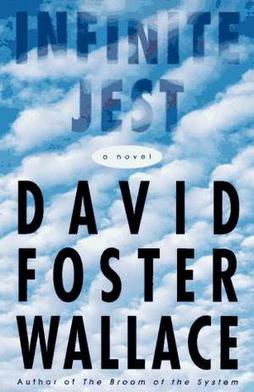
Perhaps a good way to truly gauge viewers’ interest in the
upcoming film The End of the Tour, starring comedic actor Jason Segel as the
literary genius David Foster Wallace, would be to allow people to see the film only
if they’ve read Wallace’s behemoth, 1,000-plus page novel Infinite Jest, the
book that Wallace is touring behind in the film. This juggernaut of a novel is
a sprawling meditation on the “Pursuit of Happiness” in America and what exactly
that phrase, or idea, means to Americans, from the '90s through to today. The
reason I bring up the idea of mandatory Infinite Jest readership is that while the supposed intelligentsia of our
great nation love to spew about how much they love DFW, upon pressing them,
most will admit they’ve never actually taken the mammoth amount of time and
effort it takes to digest a book that that not only caused its author to be
dubbed a genius, but would assuredly cause a concussion if thrown at someone’s
head. Case in point: I’ve met someone who claimed DFW as their favorite author,
only to promptly confess they’d never read his greatest accomplishment, and
musician Marnie Stern’s song “Year of the Glad” is a direct reference to Infinite Jest, even though she herself admits to never having read the book.
This really shouldn’t surprise anyone. I’ve read Infinite Jest
twice, and it’s a doozy. It’s dense, chock full of academic jargon, including
the chemical breakdowns of drugs, both legal and illegal, and has over a
hundred pages of endnotes that the reader must constantly flip to in order to
flesh out the quasi-science fiction alternate reality Wallace creates (On an
appalling sidenote, the recently released audiobook version of the book left out
the footnotes completely, probably because they would have had to pay the
reader quadruple-overtime to record them). It’s also a dark, dark work,
struggling with the nature of addiction, sadness, and loss, all in the face of
the American dream and what that term means in the 21st century. So no
wonder a lot of people don’t really want to slog through this trench of
really-really smart person despair. What it seems a lot of people do want
is for everyone to know that they know who DFW is, that they know what Infinite Jest is, and that they know how important it is to “literature.”
Which brings us to the trailer for The End of the Tour.
Jason Segel, best known for comedic works like the television shows Freaks and
Geeks and How I Met Your Mother, stars as David Foster Wallace while on a
book tour following the success of Infinite Jest in 1996. Jesse Eisenberg co-stars
as David Lipsky, the Rolling Stone writer who was sent to cover the end of the
book tour and write an article about Wallace. That article never came to be,
but following Wallace’s suicide in 2008 Lipsky released the book Although Of
Course You End Up Becoming Yourself, composed of the transcriptions of the cassette
tapes of his and Wallace’s conversations during the tour. It’s an intimate,
fragmented portrait of Wallace at the time, and comes with sporadic
interjections that Lipsky added as a sort of narration. From these two elements
comes the narrative that, at least after seeing the trailer, I assume The End
of the Tour is seeking to portray: A smart, successful guy wanting to be this
other super-smart, super-successful guy. Lipsky never says anything so
bald-facedly in Although, but he does pine at certain moments about Wallace
being smarter than him, and feels envious at the copious attention Wallace receives during the tour.
Yet Although Of Course You End Up Becoming Yourself only
covered about four days in the life of Wallace, during which he denied
being a recovering drug addict and alcoholic, as well as attending AA to deal
with these issues. Given that his real-life experiences with addiction, as well
as his friendships with his fellow AA members, gave his much of the inspiration
for Infinite Jest, his unwillingness to discuss this part of his past seems
like a glaring omission in the face of the book’s success. If anything, Although paints a rather rosy picture of Wallace, one of him as being
self-effacing and kind, and I’m not saying he didn’t have those qualities. However, Every Story Is A Ghost Story: A Life Of David Foster Wallace, the 2012
biography of Wallace, detailed a much darker story surrounding the genesis of Infinite Jest, one that, frankly, makes more sense regarding the nature of
the work. No need to go into gory details, but safe say to the Wallace of Although is a much more movie-ready version of the beloved author.
So the question remains of why The End of the Tour was made,
and what it is trying to achieve. The David Foster Wallace Literary Estate does
not support the film, on the grounds that Wallace would never have allowed
himself to be portrayed in a movie. Considering that in Wallace's novel the term "Infinite Jest" refers to a film so seductive its viewers lose the will to do anything but endlessly watch the film until their death, this was a man who had serious reservations about commercialized entertainment simply as a viewer, let alone being any kind of public celebrity himself. So perhaps, like all those people who seem to
love the idea of loving an American literary genius, rather than his actual
work, Eisenberg’s Lipsky is the true identification figure of the film, someone who wants to
be successful genius without really understanding what that truly entails. Wallace
led a dark life that ended in suicide, and that darkness is only ever hinted at
in Although. The credibility of The End of the Tour as a portrayal of DFW
is contingent on the parts of the script that aren’t in Although; while much
of the dialogue that appears in the film is from the book verbatim, a bit where
Wallace is imploring Lipsky to “just be a good guy” seems less like an actual
conversation and more like typical feelgood movie gobbledy-gook.
But Lipsky didn’t write the script. David Margulies adapted
it. So most likely this is a case of another movie-biography adaptation cliché,
a feelgood romp that allows us to feel closer to Wallace through Segel’s
impersonation. Four days is hardly enough to get to know a person, especially
considering it takes at least ten times as long to read Infinite Jest. Pretty ironic, as the book could be considered a look inside Wallace’s mind. Most people
who see this The End of the Tour will probably never read it.
Subscribe to:
Posts (Atom)